
I Lived

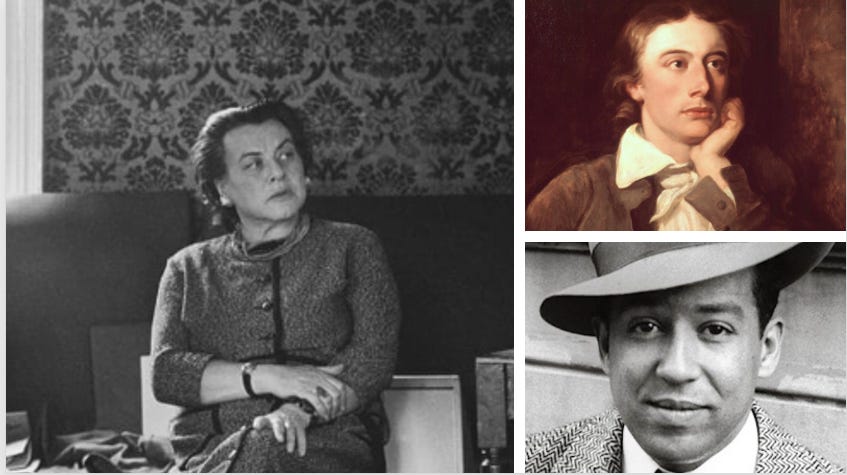
How to write a poem that seems to come from a full awareness that one is alive?
20th century American poet, Muriel Rukeyser, achieved this in poems which reflect a profound alertness to the particular historical moment in which she lived.
The following poem is, in many ways, her signature poem. Written while living in New York during World War II, this poem is unusual in that it is both personal and political, reflecting a profound recognition of living in the specific anxieties of a precise moment in time:
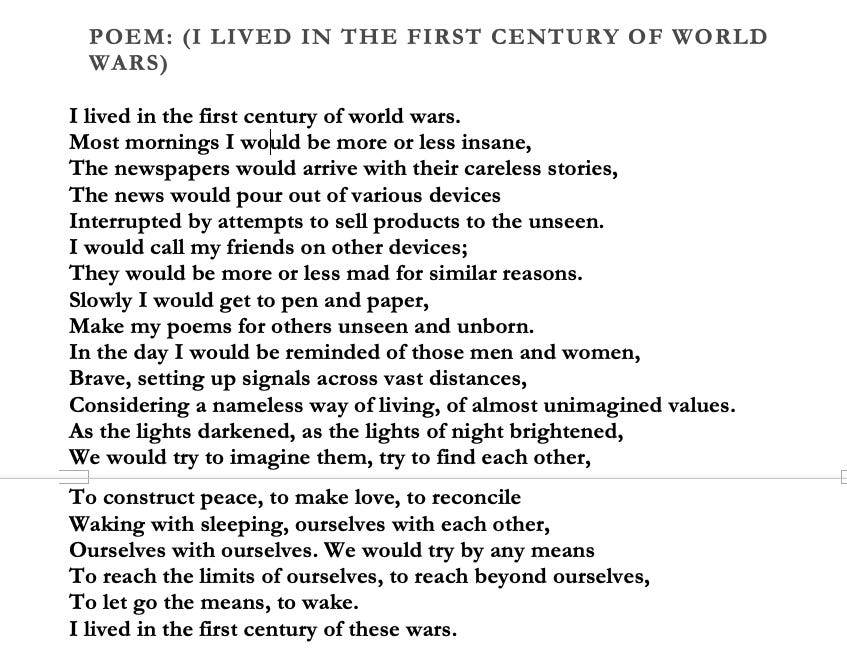
The poem begins by announcing ‘I lived’ as if it is a voice speaking to us (the ‘unseen and unborn’) from the grave.
Rukeyser repeats almost verbatim the first line of the poem in the final line of the poem -- the repetition highlights the speaker’s desire to communicate that she ‘lived’ during this period. She is astonished, in shock, and needs to say it again as if she can’t quite believe what she is witnessing during this time in history.
A poet’s sense of being alive in a particular moment does not have to be explicitly political or historical. In this poem by 19th century English poet John Keats, the narrator seems to speak directly to someone he knows in his own life, but, like Rukeyer, he also speaks to us; he speaks to the future – he reaches out to us, telling us that he is ‘living.’
The American poet, Stanley Kunitz, used to say that poetry ‘tells the story of the soul’s earthly adventure’ and Keats’s poem offers a snippet of someone being conscious of their soul’s fleeting adventure on earth. The brief poem is filled with passion, rage, calm, and both the warmth and coldness of life:
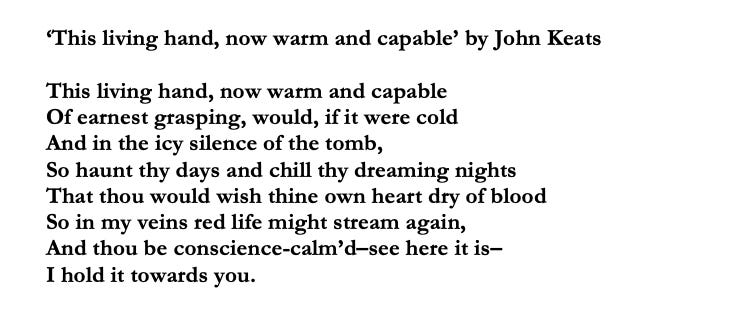
The word ‘living’ before ‘hand’ is fascinating: the word would seem unnecessary. It makes us wonder why the hand’s aliveness is being emphasized (‘the lady doth protest too much, methinks’) – and we soon learn that the poem is about (a possibly imminent) death so noting that it is ‘living’ contains a wish to stay living and an anxiety about what will soon be lost.
The alliteration in the poem matches the poem’s intensity (see the hard ‘c’ sounds in ‘capable’ and ‘cold’ and the hissing ‘s’ sounds in ‘icy’ and ‘silence’). The poem ends with a sense that the poet is practically reaching towards us from the past, begging us to understand, listen, empathize.
In the following poem by 20th century American poet Langston Hughes, the narrator declares his aliveness through his deep connection to his heritage. All lines but one begin with ‘I’ve’ or ‘My’, asserting a sense of self, and a confidence and awareness of being alive. The poet declares that he has ‘known’ so much; historical moments and places become personal as if he actually experienced them.
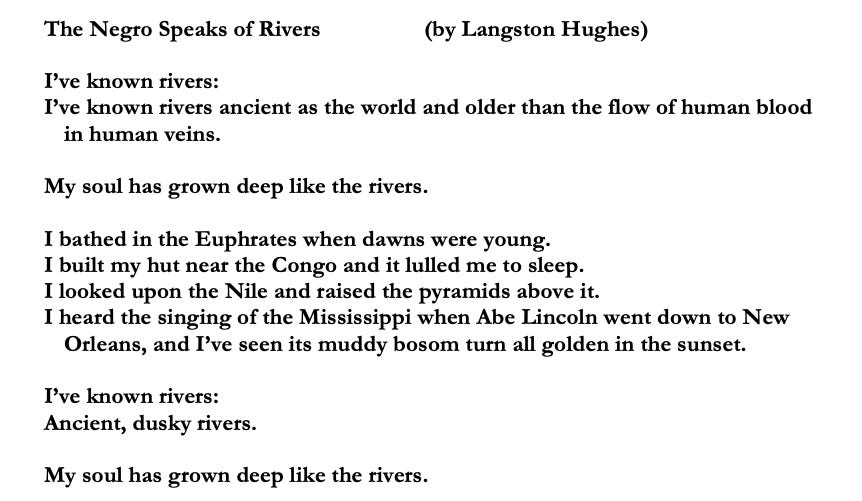
All three of the poems (‘Poem: I lived in the First Century of World Wars’; ‘This Living Hand’; and ‘The Negro Speaks of Rivers’) speak to us now as if each poet knew we would be reading their words. These are poems which are driven by an urgent need to speak to the people of their own time and to the people of the future: us.
Prompts:
1. Begin this poem with the words, ‘I lived’ and then describe a certain aspect of your own personal life or describe events you see around you. Imagine you are speaking to future readers. Allow the last line of the poem be almost identical to the first line of the poem.
2. Write a poem about your hand. Use phrases such as ‘this hand’ and ‘here it is.’ Describe your hand and what it does each day, what it is capable of. Speak to the reader, use the word ‘you.’
3. Look deep into your own past, your heritage, your ancestors. Tell the reader what you ‘know’ based on your connection to your own personal and cultural history. Describe specific places and possibly historical figures. Allow there to be refrain.
UPCOMING CLASS:
August: Four Wednesdays – Poetry and Urgency at Hudson Valley Writers Center on zoom.